
Choosing the right fruit tree for a Michigan yard requires a strategy that accounts for our erratic spring thaws, heavy soils, and specific pest pressures. To move beyond a “surviving” tree to a “thriving” one, focus on these critical selection pillars.
1. THE CLIMATE MATCH: BLOOM TIMES AND HARDINESS
In Michigan, the “Hardiness Zone” is only half the story. The real challenge is the “false spring”—those warm late-March days followed by a deep freeze.
- Prioritize Late Bloomers: Select varieties noted for blooming later in the spring. This protects blossoms from being killed by a late frost, the primary cause of crop failure in Michigan backyard orchards.
- Chill Hour Requirements: Ensure the variety has a high enough “chill hour” requirement. Trees with low chill requirements may wake up too early and suffer significant dieback.
- Disease Resistance: Look for cultivars labeled as resistant to Apple Scab and Fire Blight. Our high summer humidity makes these the most common obstacles for home growers.
2. THE POLLINATION PUZZLE
Most fruit trees are not “set it and forget it.” Many species require a partner to produce fruit, and the timing must be exact.
- Check Compatibility: Apples, pears, and many plums are generally self-sterile. You will need at least two different varieties that belong to the same Pollination Group to ensure cross-pollination.
- The 10% Rule for Resilience: To protect your yard from widespread loss, avoid planting a monoculture. Try to ensure no more than 10% of your landscape is of the exact same cultivar to create a natural barrier against pests.
3. PURPOSE: EDIBLE VS. ORNAMENTAL
Before you dig, decide if you want a harvest or just a view. Both have their place in a Michigan landscape, but they require different levels of commitment.
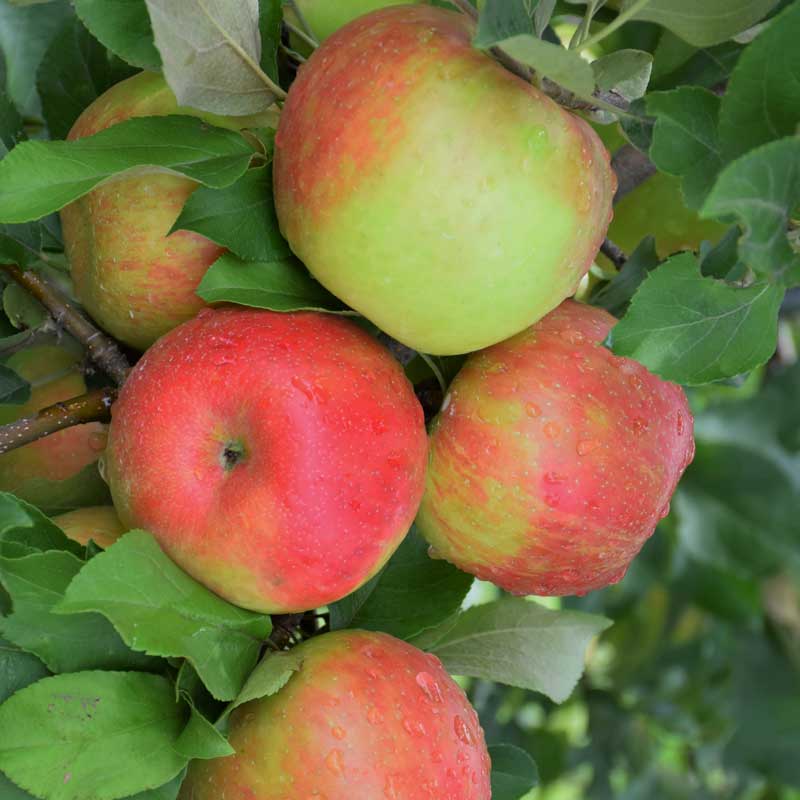
- Edible Fruit Trees: Varieties like Honeycrisp or Montmorency provide a delicious harvest. However, they require more maintenance, including specific pruning and pest management, to ensure the fruit is kitchen-ready.
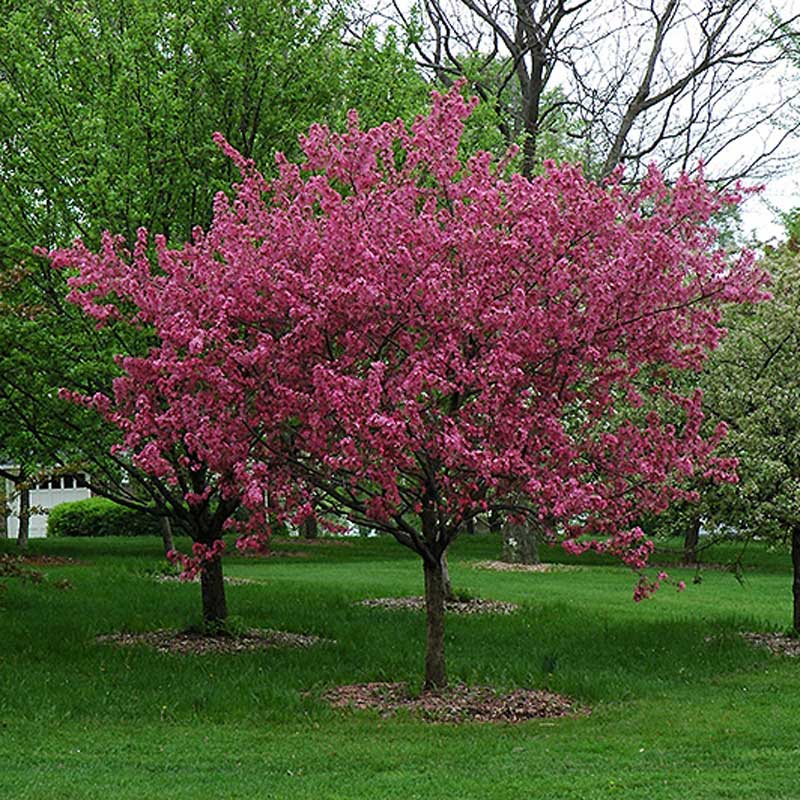
- Ornamental Fruit Trees: Flowering Crabapples or ornamental Pears offer stunning spring displays and wildlife value without the cleanup of fallen fruit. These are often bred for higher disease resistance and “tidy” growth habits.
4. INFRASTRUCTURE: SIZE AND SOIL
The “engine” of the tree is the rootstock it is grafted onto. This determines how large the tree will get and how well it will handle your specific soil.
- Dwarf vs. Semi-Dwarf: For most residential yards, Semi-Dwarf trees (12–15 feet) are the sweet spot, manageable for pruning while remaining sturdy in Michigan winds.
- Identify the Root Flare: When selecting a tree, the root flare – where the trunk widens into the roots – must be visible. If the trunk looks like a straight pole in the dirt, the tree is planted too deep and is at risk for long-term health issues.
TIMING YOUR PLANTING FOR SUCCESS
In Michigan, the window for planting is dictated by soil temperature and moisture.
- Spring (The Gold Standard): Late March through May is ideal. Planting early allows the tree to establish roots before the summer heat.
- Fall (The Secondary Window): Late September and October work well for container-grown trees. The cooler air encourages root growth, provided you mulch heavily to prevent “frost heaving.”
THE MICHIGAN “CREAM OF THE CROP” LIST
Historically reliable performers for the Great Lakes region:
Edible Favorites
- Apples: Honeycrisp (Cold-hardy), Liberty (Disease-resistant), Northern Spy (Heirloom).
- Pears: Harrow Delight (Blight-resistant), Bartlett (Classic canning).
- Cherries: Montmorency (Hardy sour), BlackGold (Late-blooming sweet).
- Peaches: Redhaven (The Michigan benchmark), Reliance (Maximum cold-hardiness).
Ornamental Standouts
- Royal Raindrops Crabapple: Features vibrant pink flowers, deep purple cutleaf foliage, and tiny berries that birds love (with no messy cleanup).
- Prairifire Crabapple: Known for its incredible disease resistance and stunning dark red-pink blossoms that hold up well in Michigan springs.
- Autumn Brilliance Serviceberry: A native Michigan superstar. It offers delicate white spring flowers, edible (but small) berries for birds, and spectacular orange-red fall color.
- Spring Snow Crabapple: The perfect choice for those who want the classic white cloud of flowers but are strictly “fruitless” to keep patios and walkways clean.
START YOUR ORCHARD WITH US
Choosing a fruit tree is a long-term investment. Don’t leave it to an algorithm, visit us at the nursery to get boots-on-the-ground advice. Our staff will help you analyze your soil, navigate pollination groups, and select a tree that fits your lifestyle. Whether you want a bounty of fruit or a maintenance-free flowering showpiece, we’ll make sure you leave with the right tree for your Michigan landscape.